Why Every Medical Facility Notary Should Read The Compassionate Notary
When you step into a medical facility, you’re not walking into a routine appointment. You’re walking into real life, often at one of its most vulnerable moments. The documents are serious. The people are stressed. The margin for error is slim. And in many cases, you don’t get a second chance.
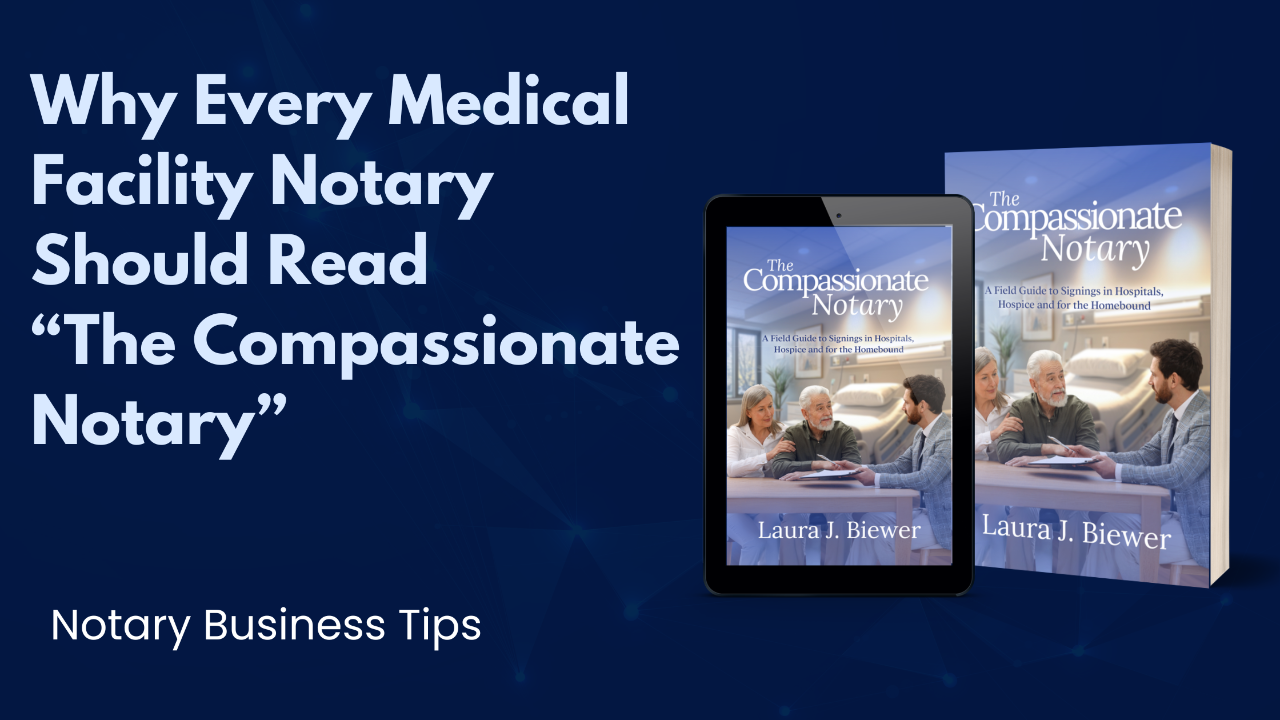
That’s exactly why The Compassionate Notary by Laura Biewer matters so much.
This book isn’t just a “how-to.” It’s a standard-setter.
I wrote a public review shortly after reading it, and I meant every word:
This book is so much more than a field guide. It’s a masterclass in presence, professionalism, and compassion.
I’ve been a mobile notary for years. I’ve walked into hospitals, hospices, rehab centers, and care facilities more times than I can count. And still, I found myself dog-earing pages, highlighting sections, and thinking, I wish I’d had this fifteen years ago.
That alone should tell you something.
Why Medical Facility Notarizations Are Different
Hospital and hospice notarizations aren’t technically “harder.” They’re heavier.
You’re often dealing with:
-
Medicated or fatigued signers
-
Time pressure from staff and family
-
Emotional dynamics that have nothing to do with the document
-
Highly contested documents like powers of attorney and healthcare directives
Most notary issues in these environments don’t come from ignorance of the law. They come from uncertainty, rushing, or stepping outside the notary’s lane without realizing it.
Laura understands this deeply.
In The Compassionate Notary, she walks through procedures and protocols clearly and thoroughly, but more importantly, she reframes how a notary shows up in these environments. She elevates the mindset.
This is not about being “nice.” It’s about being steady, competent, and trustworthy.
What This Book Gets Right (That Most Training Misses)
Laura doesn’t just explain what to do. She explains why it matters.
If you’ve ever:
-
Felt unsure about assessing a medicated or disoriented signer
-
Walked into a facility without knowing who to check in with
-
Been caught in tense or emotional family dynamics
-
Wondered whether you’re doing too much (or not enough)
-
Wanted to be the professional that people remember and refer
This book speaks directly to you.
It covers the full arc of these appointments:
-
Understanding medical environments and how they actually function
-
Intake and pre-screening to protect yourself and the signer
-
Scheduling with sensitivity instead of urgency
-
Entering facilities properly and professionally
-
Safety and hygiene protocols bedside notaries must take seriously
-
Orienting the signer and conducting the signing calmly
-
Navigating challenges, witnesses, and documentation
-
Knowing when to proceed (and when to walk away)
And importantly, Laura doesn’t ignore reality. She addresses in-person electronic notarization and remote online notarization in the context of bedside work too.
This is lived experience on the pages of a book.
Competence Is the Foundation of Compassion
One of the most important themes in the book (and in my recent podcast conversation with Laura) is this:
Compassion without competence is dangerous.
Good intentions won’t protect you if a document is challenged later. Caring deeply won’t matter if you rushed the assessment.
In medical facilities, professionalism is compassion.
Laura shows notaries how to slow down, stay present, and operate with confidence, not bravado. The kind of confidence that comes from knowing your role, honoring your limits, and documenting your decisions properly.
That’s how notaries avoid problems. That’s how families are served well. That’s how reputations are built.
The Part the Book Doesn’t Teach (And Why That’s Okay)
The Compassionate Notary is a field guide. It does its job exceptionally well.
What it doesn’t do (and intentionally so) is teach marketing.
Medical facility work doesn’t magically find you.
That’s where our recent podcast conversation comes in.
In the episode “Hospital Notary Work: High Risk, High Reward,” Laura and I talk openly about:
-
How notaries actually become the go-to professional in facilities
-
Why staff want “an outside notary with insider knowledge”
-
How relationships (not ads) drive repeat work in this niche
-
How online visibility plays a role when families are searching urgently
The book teaches you how to do the work right. The podcast conversation teaches you how to build it intentionally.
This Week’s Notary Business Tip
If you want to work in hospitals, hospice, or with homebound clients:
Start with competence. Then build visibility and relationships on top of it.
Skipping the first step puts everything else at risk.
Your Next Three Steps
-
Listen or watch the podcast episode Hospital Notary Work: High Risk, High Reward It will change how you think about this specialty.
-
Buy the book The Compassionate Notary by Laura Biewer This belongs in your bag, not just on your shelf.
-
Join the free High Performance Notary community on Skool That’s where we teach the marketing side of this work: how to get found, build relationships, and create repeatable business without compromising professionalism.
Medical facility notarizations demand more from us.
This book raises the bar. The conversation sharpens the edge.
And if you care about this work, that’s exactly where you want to be.

Free Download: The Legacy Notary Handbook (157 Pages)
You're already the trusted person in the room during the biggest decisions of a family's life. You're just not getting paid like it... yet. This free 157-page guide shows you how to step fully into that role, help more families, and build something that actually lasts. Instant download, zero cost.

Make Progress Every Day With Support!
I built a community on the Skool platform for ANY notary who would like to make massive progress on your goals and make it your best year ever! This community includes video lessons and challenges, PLUS live teaching and training direct from me. This is a GOAL oriented community and we'll check-in on revenue goals weekly, quarterly, and annually. More Clients, Income, & Confidence!

Get More Attorney Clients!
This "new" specialty is the future for mobile and remote notaries! I went all-in on living trust presentations for estate planning professionals, and I created this FREE REPORT that details my strategy and the Top 25 Lessons I learned Marketing to Estate Planning Attorneys.
You won't believe this!

Free Report: How to Make $2,000 a Month as a Loan Signing Agent
No matter what is happening in the world, someone, somewhere, is buying, selling, or refinancing real estate. Every single one of those transactions requires a notary public. With brief additional training, and a willingness to meet clients at a convenient time and location, you can build the ultimate side hustle or business.
Flexible Schedule. Unlimited Income. Legitimate Business.
Become a Mobile Notary and Loan Signing Agent.
Recent Posts